Unfortunately, I have not been able to find too much extra information about Ulan. Even the authoritative Ghost Towns of Oklahoma by John W. Morris (1978, The University of Oklahoma Press, Norman, OK) neglects to mention it (in fact, the only Pittsburg County ghost town it goes into detail on is Adamson, and makes only passing references to Dow and Alderson). But I would like to compile all that I have into this article so at least what I have found will be accessible in one spot, and hopefully it will be one of the top search results in the future when others Google "Ulan, Oklahoma". I'm sure there will be other families, like mine, who are connected to Ulan and will want to learn more about it. So I'm going to share as much as I can, and add to this if I uncover more in the future.
It should be pointed out from the outset that this post is not purely historical and informational. It is also genealogical in nature. As this is my genealogy blog that might be obvious, but in case as you're reading you're wondering why there are so many references to my family throughout this post, it's because my family is my point of reference for this community. I've learned what I know about Ulan from being a part of this family and speaking to members of it, so it is easy for me to tie in my family's experiences into the general narrative about the area. I believe it's safe to assume that their experience around Ulan was fairly typical of what most families experienced, so tying them into the narrative is beneficial both genealogically and historically, in my opinion. My target audience for this post are people with ties to Ulan, and if someone has ties to Ulan, they probably have ties to my family by blood, marriage, or as former neighbors. That said, both the historical and the genealogical information should complement each other.
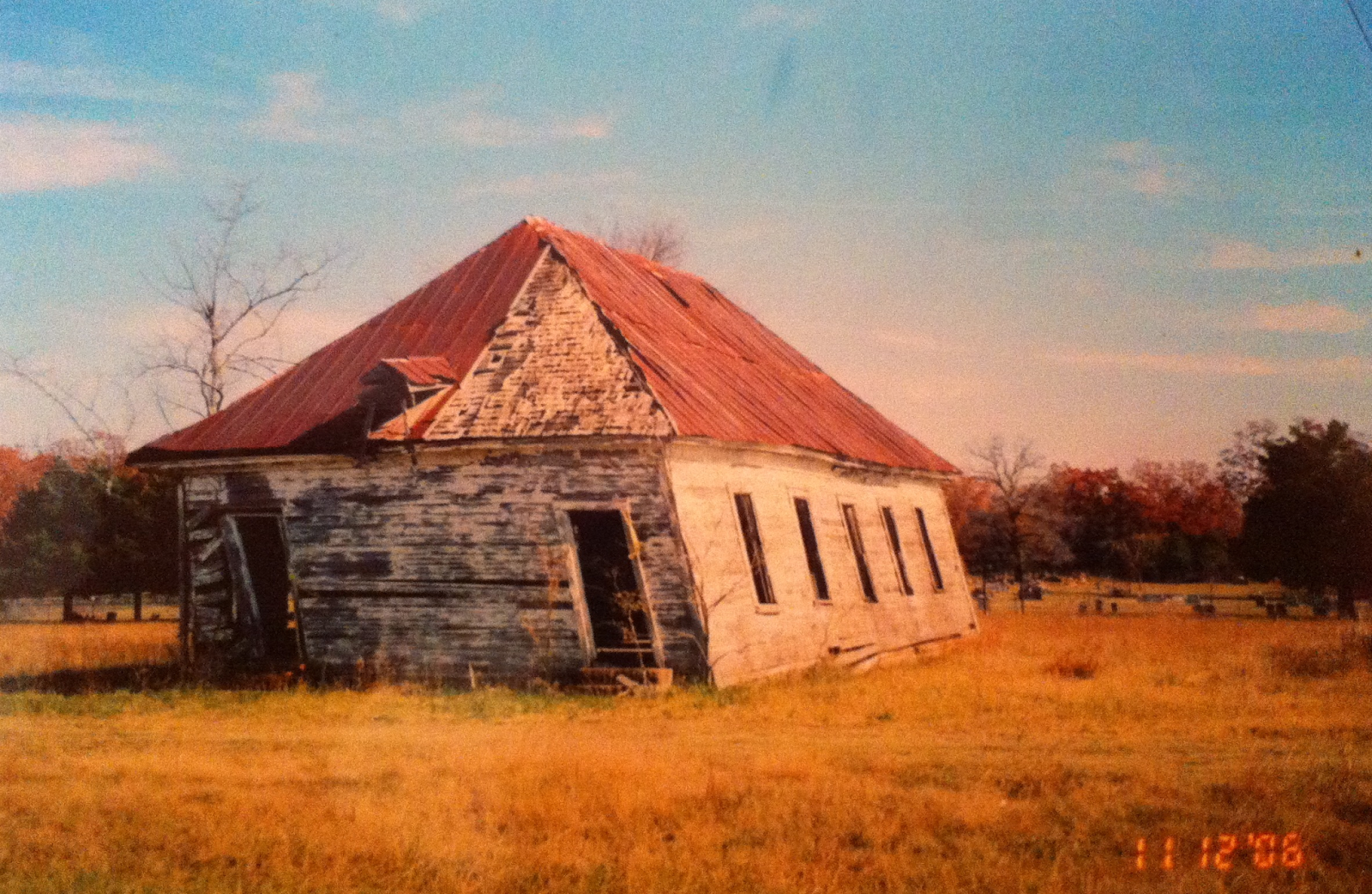
First, I'll show on a map of northern Pittsburg County where Ulan lies. The people who would have considered themselves members of Ulan's population lived in both Scipio and Indianola townships, and later in Bucklucksy Township as well, which is immediately south of Indianola Township. Ulan was in Indianola township, but on the very border, less than a mile from Scipio township. All that really exists of the town now are the cemetery and the Ulan Baptist Church. The store is long gone, and the schoolhouse was torn down several years ago. It is just off the Indian Nation Turnpike off the Indianola exit. This first image shows its location in relation to the communities of Hanna and Indianola. (Source: Google Maps)

This next one shows where Ulan is located in relation to the Indianola exit of the Indian Nation Turnpike. The green patch is the cemetery, and the church is directly in front of it. (Source: Google Maps)

Here is a more detailed map of northern Pittsburg County, with Ulan circled in red. (Source: http://www.travelok.com/files/genealogy/Pittsburg.pdf)

These are photos I took of the area around the cemetery and church in March, 2016 to give an idea of how it looks today.


Next, I'd like to share a video. Recorded in 2000, it is of my grandfather, Don Vaughan, showing off the Scipio school he attended, his family's homestead near Ulan, the Scipio Creek that runs through Ulan, and finally, the Ulan Cemetery, where his parents, all 4 grandparents, and one set of great grandparents are interred. He now rests there himself.
The Pittsburg County Historical and Genealogical Society released a Pittsburg County History book in 1997 which has a small excerpt about Ulan. 80% of the article is duplicated verbatim from Ulan Memories, a small booklet about Ulan released in the 1980s. Only the last two paragraphs are not from that publication. I am going to transcribe those two paragraphs, and the remainder of the article's contents is shared below in my transcription of Ulan Memories.
Please note I DID NOT WRITE THIS EXCERPT. It comes from "Pittsburg County, Oklahoma: People and Places", copyright 1997 from the Pittsburg County Historical and Genealogical Society, Inc. Published by Henington Industries, Inc. out of Wolfe City, Texas. This particular article within the book is credited to Judy C. Thompson, with the sources for the information listed as Kenny L. Brown (the compiler of the information in Ulan Memories), and Faye Hayes. If copied in any way, full credit and citation needs to be given to the Pittsburg County Historical and Genealogical Society, Inc.
Page 554: "Faye Hayes writes that her mother, Effie Blevins Smith Bankston, born April 4, 1912, told her that she could remember when she was a little girl and went to school in the new building. Often in the course of the day she would fill her sock-cap with wood blocks and small scraps of boards and carry them home to play with. Some of the teachers she remembers were M. P. Jones, Will Rye, Mrs. M. P. Jones, Ella Cummings, Mrs. Walker, Ralph Byington, Merl Byington Wadley, Gertrude Shackleford, and Frankie Bowen.
The store at Ulan was built about the same time the new school was erected. It was owned and operated by the M. P. Jones family. They carried essentials there, basic line of groceries, patent medicines, and kerosene (everyone had kerosene lamps then). There was a gasoline pump and for several years a small post office. At least its where a lot of people picked up mail and she remembered occasionally a letter would be mistakenly sent to Vian instead of our Ulan. Sources: Kenny L. Brown; Faye Hayes, Rt. 2, Box 220, McAlester, OK. Written by Judy C. Thompson."
Before the town of Ulan was established, many of the people who would eventually be a part of Ulan lived in an area called Thurman. How early Thurman was settled is unclear, but its post office was established by 1888, according to a letter in the Muskogee Phoenix newspaper, transcribed later in Ulan Memories. By 1892, my great great grandfather, John Lafayette Vaughan, married his first wife there, and they both listed their residences as Thurman. You can view the original 123 year old document, which is in my possession, below.

John was widowed in 1897, and in 1898 he remarried to my great great grandmother, Leona Waller. At that time, they also both listed their residence as Thurman, Oklahoma. It is worth noting that when John's first wife (her initials are S. A. on the marriage record, supposedly for Sarah Ann, but her headstone says Eva) died, she was interred at Choate Prairie Cemetery, which is just a couple miles up the road from Ulan Cemetery.
According to Colleen Vaughan Allen, who grew up in and around Ulan, Choate Prairie is where most people in that vicinity were buried prior to the establishment of Ulan Cemetery. She would always say that her grandmother (the aforementioned Leona Waller Vaughan) was the second person buried at Ulan Cemetery, which appears to be accurate based on marked graves in the cemetery. The first established burial with a marker is Cecil Gordon, who died at six years old on 5 Jun 1919. Leona was next, dying 31 Jul 1919. There are six other marked burials in the cemetery dated in 1919, which seemingly establishes the date that the cemetery began as June, 1919.
There are significantly more graves in Choate Prairie marked with blank field stones than Ulan has, so it is more difficult to firmly establish when it came into use. It appears the two earliest burials are from the Choate family, both occurring in December, 1881. Tennissee Choate died 18 Dec 1881 according to her headstone, followed shortly by Jincy Choate on 31 Dec 1881. These were the only two burials I found with these years, with several in 1882 and 1883, and increasing in number by year until around the 1910s, when the number of burials slowly starts to decline. This aligns with approximately when Ulan Cemetery came into use, so the timeline makes sense.
Also in the immediate vicinity and in use during the same time-frame as Choate Prairie is a burial ground today referred to as the Turner McElhaney Cemetery, which is less than a mile from the Choate Prairie Cemetery and is also off Choate Prairie road going toward Indianola proper. The earliest marker burials are (or were) dated in 1891. The oldest recorded burial was for William Foster Turner, who died 1 Jan 1891. The next recorded burial was for Amanda Smith Napier Vaughan Jones, the mother of the aforementioned John Lafayette Vaughan. She died 17 Nov 1891.
The cemetery is in on private property, but as it turns out, the owner's wife was a 2nd cousin to both myself and the cousin who brought me, Charlie Vaughan, and we were permitted entry. It is divided into three sections. The first is a fenced section which houses several Turner family graves; it appears mostly intact. The second section is un-fenced and has sustained heavy damage, apparently from either turbulent weather or from machinery passing through the area, or both. The third section has mostly McElhaney graves, and is also fenced, but half the fence is damaged and torn down, and some of the headstone here were damaged or missing as in the second un-fenced section.
Here is a map showing the route from Ulan Cemetery to Choate Prairie Cemetery to the Turner McElhaney Cemetery, in relation to Indianola.

These are photographs of the three sections of the Turner-McElhaney Cemetery. The second section's photo is blurry because it was screen-shot from a video filmed while surveying the area. I failed to take a proper photo of it, though it only has broken bases of headstones and field-stones and no longer has any standing headstones. It was taken from the vantage of the 3rd section of the cemetery, where the McElhaney graves are.


Many of the headstones that have been previously recorded as being at the Turner-McElhaney Cemetery are now gone, including my aforementioned 3rd great grandmother Amanda Napier Vaughan Jones's stone, which would have been in the mostly-lost second portion of the cemetery. Fortunately, we have a photo of my cousin Colleen Vaughan Allen lifting the stone back into place (even then when it was taken in the 1970s or 80s, it had already fallen) that gives us its text and information.


The persons buried in this cemetery would have been near what was considered Thurman and later near Ulan, but more a part of the Choate Prairie community. Choate Prairie had its own post office from 1894 to 1904, with a church having been established in 1879 just south of where the cemetery would come to be located in 1881, called the Choate Prairie Baptist Church. Choate Prairie had its own school as well until 1930, when like Ulan later was, it was annexed into Indianola schools. (Source: Pittsburg County, Oklahoma: People and Places, 1997, Pittsburg County Historical and Genealogical Society, Inc., Published by Henington Industries, Inc.)
Another early area cemetery was the Dunagan Cemetery. When heading north on Choate Prairie road before the road veers east, there is a private drive going west. The cemetery is located off that drive very near the turnpike. Members of the Perkins, Steward, Bowen, Dunagan, Brown, Beame, and Lewis families, among others, are buried there. Headstones date from 1879 to 1925, so burial there can be established two years prior to graves at Choate Prairie. There are less than 30 legibly marked graves that have been located there.
As I have not found school records or any other "official" records for Ulan prior to the 1920 School Census other than the establishment of the Ulan Post Office in 1917 (the record of which does not give a precise location), I have based Ulan's general area on the residences of my family in each federal census up to that point. In 1900, the John L. Vaughan family is found in enumeration district 78, township 8 N, range 14 E. (https://familysearch.org/ark:/61903/1:1:MST7-63Y) This 1900 Indian Territory Enumeration District website confirms that this is within Pittsburg County, but without determination of where in relation to the Canadian River it lay: http://www.okgenweb.org/~itgenweb/itprojects/census/1900-it-eds.htm.

Circa 1902: Leona Vaughan, wife of J. L. Vaughan, holding son Sampson, with son Cotnar next to them. This is the only known photo of Cotnar, who died in 1907 at age 8.
Surnames in the immediate vicinity of the Vaughans in the 1900, which would be other families living in what would have been around Thurman and what would later be considered the Ulan vicinity include: Moody, Green, Beesley, Taylor, Barlow, Willingham, Richey, Kindrick, Flannigan, Whitehead, Epps, Tomlin, Utterback, Daniels, Miller, Nichols, Price, Cates, and many more.
In the 1910 Census, the Vaughans are listed in Indianola Township, Pittsburg County, Oklahoma (https://familysearch.org/ark:/61903/1:1:MLWS-524). I am certain that they fell in the vicinity of Ulan thanks to a school photograph taken at the Union Prairie School between 1910 and 1920. A copy was held by Colleen Vaughan Allen, and labelled the girl in the white hat beneath the bell by the school to be my aunt, Lou Ona Vaughan. It says 1909 on the back, but Lou One was only 6 years old at that time and would not have been so tall and at the back of the crowd of children. If guessing by Lou Ona's apparent approximate age, I would say it was more likely taken about 1914-15, likely not long before the old school house was torn down and the new one built in 1915, according to the above report from Pittsburg County, Oklahoma: People and Places.

When comparing the above structure with the photograph below of the schoolhouse in 1926, it is clear they are different buildings. This one is significantly smaller, with far fewer windows. So this must be the original Union Prairie/Ulan school house, and this is the only photograph of it that I have located.
Unfortunately, none of the other persons in the photo are identified, but if one had school-age children in their families around Ulan around 1914-1915, there's a chance they could be in this photo. It is likely my great grandfather, Sampson Vaughan (born 1901), is in the group, and likely his brother John D. (born 1906) as well. Depending on how early they started him in school, my uncle Charles Vaughan (born 1909) could also possibly be there. As Colleen was John's daughter and she did not identify him in the photo, I doubt I would have better luck at picking out faces than she, so I'm not going to attempt any guesses.
This is the best photograph of the Union Prairie/Ulan school house I have come across. The label says it was taken in 1926 and was the best example of how the school looked in the early 20th century. I do not know who owns the original; my copy came from Colleen Vaughan Allen.

Next is a photograph of the John L. Vaughan family and their home, taken approximately 1915-1916, based on the children's approximate ages, and the fact that Dewey (b. 1917) had not been born yet. I believe their residence would have been fairly standard for that time period and geographic locale. Left to right are: Lou O. Vaughan, Sampson L. Vaughan, Leona A. Vaughan, Nicie J. Vaughan, John D. Vaughan, John L. Vaughan, and Charles T. Vaughan.


The above is a screenshot taken using the Google Maps App while standing in the approximate area where the house stood. It shows its relation to the Canadian River and Indian Nation Turnpike today.
Moving to the 1920 Census, by this time two of my great great grandfathers were living in the Union vicinity. John Grady Auston came from Tennessee by train to Ada, Oklahoma, where they stayed for two years before moving to the Ulan area; this John's mother was Sarah Frances Elizabeth Epps, of the aforementioned Epps family who could be found in this vicinity as early as 1891, when her brother John was buried at Choate Prairie. John G. Auston and John L. Vaughan both had households in Scipio Township, Pittsburg County. Other heads of household directly connected to these families and also lying in Scipio Township were the households of W. J. Swift, S. L. Newman, Rufus Smith, W. C. Davis, William Epps, W. C. Epps, and W. R. Vaughan.
Scipio Township takes up 36 pages of the Census record as a whole in 1920, and the first 22 are listed as households on "the NW side of Scipio Creek", according to page 11B (or the 22nd page) of the Census record. What is interesting is that despite all of these homes being in immediate proximity to one another based on the order of the households in the Census, the families were split between two different schools. A number of families in this area were sending their children to Union Prairie/Ulan, while quite a few more were sending their children to Byington School. So the history of Byington directly corresponds with the history of Ulan, as many of the people who would say they're from Ulan (including my great grandmother, Lillian Auston Vaughan) actually attended Byington school, even while living by and near those who went to Union Prairie/Ulan school.
For information on Byington, we will turn once again to Pittsburg County, Oklahoma: People and Places, page 478: "Byington School was located in Section 33, T-7-N, R-13-E. The first building was a one-room log building. Dave Byington donated the land. His son, Simon, was the teacher. The school was there by 1911. There was a $2 fee for students to attend to help cover expenses.
Tux Bowen recalls walking 1¾ miles to school. The lunch was
sausage, biscuits and jelly and of course, carried in a lard bucket to keep it
fresh. Tux also remembers teachers: Ella Wilkerson and John Turner. The school board
was L. H. Bowen, Dede Anderson and John Clifton. Other teachers were Miss
Maxine Messel, Myrtle Bangs, and Merle Byington.
As the school population grew a second building was built
just north of the first one. Some of the people in the community decided to
change the name to Pleasant Valley, but after disagreeing, a vote was taken and
it was changed back to Byington. The school was used for pie suppers, and the
annual Christmas tree.
The mountain just north of Byington was used to survey the
county. . . . On June 10, 1941, Byington School closed its doors and was
annexed to Indianola. Source: Tux Bowen. Written by Sue Countz."
I left out the list of students from 1920 where the ellipsis is placed, because in a later post I am going to share all of the Byington and Union Prairie/Ulan School Census records from 1920-1930 all together. At least one of the teachers of Byington and Union Prairie/Ulan overlapped, and as the census indicates, so it is clear that these schools both served the Ulan population. A school census was conducted regularly in Pittsburg County, and several of them have survived. The 1920 and 1930 School Censuses have been compiled and published into two volumes, and are available at the Pittsburg County Historical and Genealogical Society in McAlester. It contains valuable information for those researching families that were inhabitants of Ulan and the surrounding area.
The school census provides the names, ages, dates of birth, and parent/guardian of each child enrolled in school. The birthdates are extremely valuable to persons researching their family, and the guardians can also reveal information in the cases where a child isn't being raised by a biological parent. The "Pittsburg County School Enumeration - 1920" books did not have publishing information or the year it was published on the books that I could locate. Volume I covered schools beginning with A through H., and Volume II covered letters I-W. I would assume it was likely compiled and published by the Pittsburg County Historical and Genealogical Society. Byington was listed as district number 26 in 1920. Ulan was number 24, and Indianola was 25.
Below are the school district maps copied from the first pages of Volumes I and II. My copy of the first map turned out very blurry, and I'm sorry for that. I've kept it because it precisely shows where Byington was, though it does not show Union Prairie/Ulan, and the 2nd map is the reverse, labeling Ulan but not Byington. On both versions of the map, Byington is circled in red, Ulan in blue, Indianola proper in green, and the Indianola school district number in orange.


Other schools nearby both Byington and Ulan were Rocky Point (89), Scipio (37), Oak Hill (32), Shady Grove (33) Nale (111), Hulowe (35), and Choate Prairie (36). It is possible that some inhabitants of Ulan attended schools other than Union Prairie/Ulan and Byington, but most appear to have been in these two schools. Some students of Choate Prairie and Scipio schools may have considered themselves residents of Ulan. My grandfather, as he said in the video above, attended Scipio School in the 1930s and 40s when the family lived in Bucklucksy Township, directly south of Scipio and Indianola townships, but Ulan was their post office until the family moved to McAlester in the late 1940s after a brief stint in California.
The very best place for information on Ulan I have found, in which the most complete history of the town can be found, is from a small booklet called Ulan Memories, a self-published work compiled and edited by Dr. Kenny L. Brown and Andrea Slaton. I have not found it listed in any library catalogs on World Cat, and have not found any other copies of it on the internet. Other than a section within the "Tobucksy News" newsletter series in May 2002, I found no reference to "Ulan Memories" anywhere.
I have made contact with Dr. Brown, whose great grandfather was a pioneer in the Ulan area and whose parents and family are buried at Ulan. He reports that he never published a 2nd issue of Ulan Memories, but may someday once he collects and organizes all of the information he has subsequently collected. He gave me full permission to transcribe and share all of the information within his publication; he considers all of the information to be public domain. He gave two copies of the booklet to me, one of which I kept and the other I have donated to the Pittsburg County Historical Society.
As I think others should have access to this information, and it is not currently in publication or available anywhere that I can locate, I will transcribe the pamphlet and share it here for those interested in Ulan and its families, with the exceptions of the Dunagan Cemetery survey and the School Censuses. Any additional notes from me will be bracketed with my initials, like so: [NM].

Preface
This small collection of information is offered to help
record some of the history of the Ulan community. All items are reproduced
exactly as the original sources; spelling and punctuation have not been
altered. Similar volumes will be produced for future Ulan reunions. . . .
Part I – In The Early Years
Introduction
Settlers first came to the present-day Ulan community
probably in the late 1870’s and early 1880’s. The area was then a remote part
of the Choctaw Nation. These first settlers were Choctaws; a few were full
bloods but most were mixed bloods. They began staking off claims to land and
immediately leased much of their holdings to white sharecroppers. Some of the
Indian families were the Byingtons, the Andersons, the Archibalds, the Beamses,
and others.
With the arrival of whites, the first post office in the
vicinity opened in 1888 at Thurman, a small cluster of houses about two miles
northeast of the present-day Ulan cemetery. That post office operated until
1902 when its name changed to Garner. In 1906 the Garner post office closed.
During the 1890’s and early 1900’s, the Ulan community was
known as Union Prairie. The name was changed in 1917 when the Ulan post office
was opened. Ulan was named after Ulan Jones, nephew of postmistress Alma Jones.
___________________
[NM: In the next section, the old Dunagan Cemetery was transcribed. A complete transcription of this cemetery can be found on FindAGrave.com here: http://findagrave.com/cgi-bin/fg.cgi?page=cr&CRid=2210802&CScn=Dunagan&CScntry=4&CSst=38&]
___________________
Interview with J. H. Steward
Interview by Grace Kelley, May 19, 1937, Henryetta, Oklahoma
J. H. Steward was born on the Twelve Mile Prairie which was
southeast of Tishomingo. When he was just a kid they moved to Choate Prairie
where the Scipio Creek emptied into the South Canadian River on the east side.
His father was a farmer and a stockman. The farms were about the size of a good
garden now.
The closest railroad was at McAlester.
MAIL
Their mail was brought to Thurman, the nearest Post Office,
from McAlester by horseback. As Thurman was twenty miles from McAlester it
would take all day for the carrier to make the trip.
THURMAN
There was a grocery store and Post Office at Thurman and
every Saturday the Indians would come to the store for their groceries.
INDIAN SHOPPERS
On Saturday there would be an extra clerk interpreter hired
for the day, which would make two clerks in the store. When the Indians came,
one of them, usually a woman, would peek in the door. The others would line up
behind her in a long line of men and women. When the clerks’ backs would be
turned she would run un the store and all the others would follow her as close
as they could, just like sheep following their leader. When they got in the
store they didn’t start buying immediately but would stand around for a while.
Then one of them would buy a nickle’s worth of coffee or sugar, just a little
of this and a little of that. I don’t know why they bought in that way unless
it was that they didn’t have enough money to buy more.
HOW THEY MADE A LIVING
The women raised the corn and served it in several different
ways besides making flour for bread out of it. The men hunted for the meat that
they are and there was all kinds of wild meat including hogs. These hogs
belonged to the nation and whenever an Indian wanted to kill a hog he could;
and if he sold it the money was his to buy whatever he wanted. A white man
couldn’t kill the hogs without paying for them. These hogs had been tame ones
which had gone wild, or in other words, they had been turned loose and raised
their young, and foraged for their food as no one fed them. Just as an old hen will
steal a nest and hatch her chickens, raise them without help from anyone and
they will be so wild that nobody can catch them. The Indians also sold hides to
buy groceries.
EARLY SCHOOLS
When I started to school there was only three months of
school and it was in the winter. It was a log house with one window in each
side by they had no glass in them, just shutters. The seats were logs split
open and the flat sides hewed to make them smooth; holes were bored in the
round side for the legs to go in; there was no backs on them. A fireplace was
on the north side of the wall that would hold an eight foot rail. It was made
that way on purpose so it wouldn’t take so much cutting and make a better fire;
one that would last longer, too. Sara Duncanon was the teacher and a mean one
too. There were twenty or twenty-five pupils and each had to pay two dollars a
month tuition. It was on Judge Fulson’s place between Thurman and Choate
Prairie. He was County or District Judge of the Choctaws.
Later they built us a two-story box house. It was built by a
lodge and I think it was the Masons. I never will forget how proud we were of
our new seats, the finest benches we had ever seen. They were slat benches with
backs on them, like they have at revivals now.
Then I boarded and went to school at Indianola. All of the
early schools for white children were subscription schools.
INDIAN NEIGHBORS
Our nearest neighbors lived two miles away “just two miles
to our neighbors house,” and we really thought it was near because other
neighbors were so much farther away. His name was Allen Arch Archiebull,
fullblood Choctaw, who had two wives, an older one and a young one who had two
children, a girl and a boy. The eldest was Wy-kee, and the youngest Charlott
and both were Creeks. I just want to say that there were never better neighbors
than the Indians were. They would do anything for you that they could.
ALLOTMENT STORY (SNAKES)
Archiebull was a Snake the same as Chito Harjo, which meant
that he refused to allot. He wouldn’t speak English at all. I don’t know
whether he could, but I could speak both Choctaw and Creek at that time. I
can’t speak either now.
He was arrested and put into jail. Now remember he hadn’t
committed any crime except not filing. They cut his pretty long black hair and
he either grieved or took cold and died. He left plenty of hogs and cattle to
keep his family, but people stole the property and the two wives died, leaving
the children who were fourteen and sixteen years old.
Tom Beams was a Choctaw officer of Pittsburg County for
thirty-two years before and after Statehood, both in Pittsburg and Toboxi
(Coal)—Permit Collector, Choctaw Officer Deputy Sheriff and one term as
Sheriff.
Someone went to Tom Beams and told him that something should
be done with Archiebull’s children, that both women were dead, the stock was
all gone and they had gone “wild”. I guess they were just living on what they
could hunt. They lived in an out-of-the-way place, you had to cross the Scipio
two miles from the mouth of it, where it went into the Canadian, or go around
the mountain.
Tom Beams felt very bad about not knowing about them, as if
he had neglected them and was at fault. He and three or four men on horses went
there and sure enough, they were as wild as turkeys. They first roped the boy
and tied him up, then they roped the girl and took them and sent them to
school. The boy lives in Eufaula now; I’m not sure where the girl is; they made
a fine man and woman, half Choctaw and half Creek.
Tom Beams’ mother and brother live close to Ulan; anybody in
Ulan can give you directions to their home. The brother is sixty-one years old.
Tom took sick and they had to operate on him and when you
operate on a Choctaw you might as well cut off his head. For some reason he
will die and I do not know why.
RANCHERS I KNEW WELL
Old J.J. McAlester had a big ranch on Gaines Creek, north of
McAlester and a feeding farm at Thurman, two ranches. His brand was: 6-6 and he
rubbed one ear but I don’t remember which. That meant he had one ear cut off
even with the head; it was an easy brand to see, in fact you could see it
almost as far as you could see the cow and it would be hard to anyone to steal.
He had a long bear and was the cleanest man you ever saw. He
drove a good buggy team and when he was passing he would call me to him or he
would come in for a while, and say, “John, I’m going to the farm and I want a
box of quail when I come back.” I’d get my traps fixed and I’d always have them
for him when he got there.
One time father hid him in a boot box when some fellows were
wanting to kill him (I don’t know why). Boots were knee high and good ones came
standing up in a wooden box, a little bit like a cedar chest but not exactly.
Dad put the lid on until they were gone and then McAlester left on the train
for a short while.
Dick Coleman had a ranch at Scipio, the C-, and a big store
at McAlester. He also lived at McAlester.
Rex Chestill was west of Canadian Switch; we did part of our
trading at Canadian Switch; it was just a post, not a town. Old George Choate
was the oldest settler and Choate Prairie was named for him. He was a
Representative to the old Choctaw Council. His hewed log house is still
standing. To go there on the main highway from Ulan to Indianola, go east past
a big brick school about a mile, the old Choate ranch is on the right hand side
of the road.
L. H. Perkins, my uncle, was a farmer and rancher but his
wife was a white woman. He went to Washington a number of time, and to the
Council at Tuskahoma. He helped build and move Indianola to the railroad. There
was a post office, drug store, eleven or twelve stores, two gins, one grist
mill, and one bank. Dr. Eubanks was the second doctor and is there now. Dr.
Johnson was the first but is dead. There were good schools and churches there.
One of my cousins owns the old place which is southeast of Indianola and lives
there and a niece is teacher in a Consolidated school at Indianola.
Charlie McDuff had a nice large ranch six miles south of
Indianola but lived at Canadian.
There were all Choctaws; they were more enlightened than the
Creeks and could talk English; most of the Creeks had to have interpreters.
ROUND-UP TIME
When Round-up time came each ranch that could afford it sent
one or two men. It would take from thirty to sixty days. We would have one
chuck wagon and the hardest job was to find it at night. There were no fences
and the cattle would stray a long way from the home ranch. We would start at
one ranch and each man would have a certain direction to hunt. All different
brands were put in a bunch, driven to the next stop and we scoured as far
around that stop as we could, then went on until we were through. At the end of
round-up the cattle were separated and sent to the right ranch. If we passed a
ranch and had some of their cows, we would leave them.
If a farmer was too poor to send a man we would keep a watch
for his cattle the same as if he were there.
DR. ROBERTSON OF HENRYETTA
The first time I saw Dr. Robertson, he was grown, and he was
clearing hickory and blackjack at the school with the wooden shutters. He lived
with his mother and two brothers, Lon and Iremy, and he was called I. W. He had
some hogs and a violin, which paid his way when he left to learn to be a
doctor. He first started to doctoring at Watsonville, which was where the K. O.
& B. railroad bridge is, near Dustin, although there was no Dustin there
then. When I was passing through I saw his sign hanging out and, of course, I
knew who it was and got acquainted with him again.
POLECAT AND BUZZARD WAR GAINS AND TOBOXI COUNTIES, CHOCTAWS
When I was very small, I had a saddle pony, and my father,
some men and I rode down a ride. They carried a white flag so they wouldn’t get
shot. The Polecats were lined up on one side and the Buzzards on the other, not
firing but ready.
Some man came before they had started shooting and rode down
between them with a white flag and whatever he told them, kept them from
killing each other. I was so small that I can’t remember any thing except how
they looked. I don’t know if I was ever told what their quarrel was about or
who the man was, but I’ve always thought he was from their Council.
_______________________________________________________________
EXPERIENCES OF PIONEER CHILDREN,
BY MRS. J. H. STEWARD
I can’t remember anything to be interviewed about but there
were two or three things I remember well, I guess they were imprinted on my
mind firmer because I was so afraid.
I was reared on Blue River near where Mr. Steward was, but I
was like a little wild thing. My sister and I would have to go after the cows
and sometimes they would be a long way from the house. The tumbleweeds were
higher than our heads, and whenever we would see anyone coming, whether they
were in a covered wagon or horseback, we would hide in those tumbleweeds
sometimes crawling a long ways. It’s a wonder we weren’t shot for some animal.
One time a circus came through there, several wagons and behind
were some camels. Men were riding the longest ones and some smaller ones were
following, which had leads tied on them. I was too scared to enjoy the sight
for I was sure that some of the wild animals would get out of those wagons and
eat us before we could get away.
Another time mother had been reading us a story of how the
Indians scalped the white people. Father had some cows that he couldn’t keep up
so he had made a rail fence so high that they couldn’t jump over it. It must
have been ten or twelve feet high. I liked to climb up and sit in the forks
that were formed at the top of the posts that held the rails in place. One day
I was sitting on my perch when I saw some horses coming. The first were paint
ponies, a lot of them. Behind these were some Indians who had stripes painted
on their faces and arms. Some of the stripes went cross or around, others were
lengthwise their arms, black and red. They had a thing (britch-clout) on with
fringe on it. Their shoes were like sandals. They had no saddle and no bridles.
They just sat up there and the horses went without guidance unless it might
have been spoken or knee pressure, I couldn’t see any. Behind them came a bunch
of white horses and they were all pretty and fat, not as some people think the
Indian horses were; and then another bunch of Indians. The last one looked like
old Jackson Barnett used to look. He had a thing on his horse like a rope, with
loops in both ends to put his feet in, but that was all of the harness that
bunch of Indians had. I don’t know who they were or where they came from, as my
parents weren’t interested when I told them and just said that they were
passing through. They may have been Western Indians with a passport to take the
horses through to sell. I don’t know. They wore no clothing except the cloth
with fringe and sandals.
NOTE: The above interview is from Vol. X of the Indian-Pioneer Papers, a collection of 100 volumes of typed manuscripts. They were compiled under the direction of Grant Foreman during the 1930s as a WPA project. A complete set of the manuscripts is at the Archives and Manuscripts Division, Oklahoma Historical Society, Oklahoma City. [NM: The full collection has now been digitized; Mr. Steward's interview can be viewed here, and others can be searched on the left hand side of the page: https://digital.libraries.ou.edu/whc/pioneer/paper.asp?pID=6079&vID=87]
_____________________________________________________________
Article from the Muskogee Phoenix, May 10, 1888, p. 2, c. 3
Thurman, May 1, 1888
As our place was born to-day, I know you have not heard from it before, therefore I will give to you the first report ever given from our proud new place or post office. We have long felt the need for a post office here, but never succeeded until today. While it is the means of accommodating hundreds of citizens; it will also be the steppingstone to many subscribers to your newsy paper. C. Goulie Rodman is our postmaster as well as our popular merchant man.
Farmers have the best prospect for a good crop that has ever been known in this section, and we have at last gotten enough rain. We now hope to reach the straw and dewberries before our supplies fall, and then we will be "all honky-dory."
We have a church, Sunday-school and prayer-meeting regularly every week, and a wheel that meets at the appointed time regardless of the weather, amidst the storm and pouring rain last week. Three rode the goat, three others arranged to get on, while three more unfortunates got thrown off.
[signed] Sipeo
_______________________________________________________________
Part II - The Ulan School
Introduction
In the Ulan community, as elsewhere in rural areas, the local public school became the center for many community activities. It was so important that it provided much of the identity for the community.
The original school was called Union Prairie School in the latter part of the nineteenth century; the name was changed in 1917 with the establishment of the Ulan Post Office. Prior to statehood the Union Prairie School was a subscription school--one funded by the parents of students with tuition payments. No government funds were available because Union Prairie was part of the Choctaw Nation, which provided no education for non-Indians.
Eva Grantham Dickens, who attended the school as a girl, recalled that in 1905 the building consisted of one room, 30 by 100 feet, and housed about 100 students. There was only one teacher. At first there were no chairs, but the students sat on benches made of one-by-fours. Students attended class about six months out of the year.
In 1908, just after statehood, a public school district was formed. The boundaries of the district were Scipio Creek on the west, the Canadian River on the north, a line running near Sandy Creek on the east, and an arbitrary line forming the south boundary (see map inside back cover). In 1915 a new school building was built; it remains standing today. Clyde, Charlie, and Riley Stark were the carpenters. Two years after the new school was completed, its name changed from Union Prairie to Ulan.
[NM: Colleen Vaughan Allen claims in her notes that the school's name was never formally/officially changed from Union Prairie to Ulan. She maintains that the name remained Union Prairie, and possessed her report cards from the late 1930s and early 1940s as proof. Pittsburg County Superintendents records name the school Ulan in its school censuses conducted between 1920 and 1930; I cannot account for the inconsistency between those records, and Colleen's report cards from the school, which I have personally viewed.]
The 1920s proved to be the heyday for Ulan school. Teachers during this time included Ella Mitchell and Esther Haggard Ragan. Between 60 and 80 children attended at that time.
Enrollment varied over the years and declined markedly during the 1950s. Ulan school closed in 1963 when it was consolidated with Indianola."
In 1908, just after statehood, a public school district was formed. The boundaries of the district were Scipio Creek on the west, the Canadian River on the north, a line running near Sandy Creek on the east, and an arbitrary line forming the south boundary (see map inside back cover). In 1915 a new school building was built; it remains standing today. Clyde, Charlie, and Riley Stark were the carpenters. Two years after the new school was completed, its name changed from Union Prairie to Ulan.
[NM: Colleen Vaughan Allen claims in her notes that the school's name was never formally/officially changed from Union Prairie to Ulan. She maintains that the name remained Union Prairie, and possessed her report cards from the late 1930s and early 1940s as proof. Pittsburg County Superintendents records name the school Ulan in its school censuses conducted between 1920 and 1930; I cannot account for the inconsistency between those records, and Colleen's report cards from the school, which I have personally viewed.]
The 1920s proved to be the heyday for Ulan school. Teachers during this time included Ella Mitchell and Esther Haggard Ragan. Between 60 and 80 children attended at that time.
Enrollment varied over the years and declined markedly during the 1950s. Ulan school closed in 1963 when it was consolidated with Indianola."

This map comes from within the Ulan Memories booklet on the last page. Dr. Brown reports that the school district was originally about nine square miles in size.
As noted above, Colleen Vaughan Allen reported that the school at Ulan never formally changed its name to Ulan from Union Prairie, at least based on records from the school itself. The school censuses conducted by the county on behalf of the state listed the school as Ulan. Colleen had one picture of students at Ulan while she attended there. I will first share a version without labels, and then two photocopies that include identifications Colleen was able to make herself. The year isn't given, but based on the ages of Colleen and her sister Naomi, this would be roughly 1940, give or take a year or two. Their mother Nellie Kelton Vaughan is also pictured.


Dr. Kenny Brown's mother, Leoma Dickens Brown (1917-1995), was a skilled writer herself. In her later years, she wrote memories of Ulan and various families who inhabited the area. Dr. Brown was kind of enough to give me copies of what was written about my Vaughans, Austons, and Eppses, as well a handful of other stories and narratives about other local families. These have not been published in any form. I will transcribe them here for the benefit of the families mentioned; all spellings remain as Mrs. Brown had them.
[Pages 20-26]
An Unpopular Teacher at Ulan
[Pages 20-26]
“Honey John” Henley
This story is about a man who lived around Scipio Creek,
Ulan, Rock Creek, and Choate Prairie. His name was John Henley. I always
thought he was an ole bachelor, but in his obituary a son was mentioned, so I
guess he had a wife at one time. All the people that knew him called him Honey
Bee or Honey John, for he stayed in the woods looking for bee trees. He also
kept hives of bees and was always giving people honey. Some people wouldn’t eat
his honey, for he wasn’t too clean or sanitary and besides the honey tasted
like smoke.
He always kept a bunch of dogs, and in cold weather they say
he would sleep with the dogs in order to stay warm. His houses that he lived in
were old shacky houses or little cabins made out of scraps.
At one Ulan reunion he was trying to start a conversation
with me, and he got on the honey deal. I asked him why he was so eager to keep
bees and hunt in the woods for bee trees. He said he always tried to keep honey
on hand to give to widows with bitter lips. Then he asked me if I had bitter
lips.
The poor old fellow died dirty and was crusted over. At one
time he asked me (at that time I didn’t know who he was) about Alcie Dickens, said
he had dated her.
Epps, Austin, and Swift Families
There were a lot of people by the name of Epps, Austin, and
Swift that lived around Ulan, Scipio, and the northwest part of Pittsburg
County. I hear that they all came from Tennessee.
There were Will or Bill Epps, Walter Epps, and Ole Lady “Aunt
Babe” Austin (who was an Epps).
Uncle Bill Epps married “Aunt Mary” Epps. She was a Swift
and had been married before to a Gregory. Uncle Bill had been married also. I
don’t know who to, but he had two children by his first marriage—Ulvie, a boy,
and Alvie, a girl. Aunt Mary had a daughter, Gertrude or “Gertie.”
Mrs. Austin had three boys that I know of—John, “Big” Bill,
and “Big” Jim. John had five girls and one boy. The girls were Lillian, who
married Sampson Vaughan; Johnie Lee, who married C. D. Epps (her second
cousin); Beatrice (Tat), who married Charlie Vaughan; and Pauline (Polly), who
married Willie Ross. Elizabeth “Snooks”, married Claud Ross, but she died about
a year after she married. Then later, Claud Ross married my mother’s sister,
Opal. John’s boy, Walter or “Little Bill”, as we called him, is still living.
He married Lorene Prescott from Indianola.
I don’t know who Walter Epps married and not very much about
him.
After Uncle Bill Epps married Aunt May, they had several
kids. There were Jim, C. D., Laidie, Hester, Marie, and Troy. Troy, or “Dad”,
as we call him, was a twin. The other twin died early in childhood. Hester
married my mother’s brother, Clifton or “Bud”. All the Epps’ kids are dead but
Marie and Laidie.
Aunt Mary had two sisters that I know of. One was Aunt Katie
Mathews; the other was a Mrs. Ervin. Aunt Mary also had two brothers—Uncle Bill
Swift and George Swift.
Uncle Bill Swift was a jumpy sort of a nervous man. He
married a woman who had been married before—Frances White. She had a son, Tony
White, and maybe a girl. Tony White married Lou Vaughan, and they had a bunch
of kids, the oldest being J. L. White.
Uncle Bill and Francis had quite a few kids—Mae, Edd, John,
Fred, Sylvia, Addie, and Pauline.
Uncle George had one son, Valdie.
Uncle Bill called my father “Mr. Sam”, and he always said
that people during the depression times had to work hard to raise all the
crops, fruit, and vegetables that could be grown. Then they should feed some to
the hogs, and what the hogs didn’t eat, the people should eat.
Haggards
There were the Haggards that lived around Indianola and
Ulan. I believe they came to Pittsburg County from East Texas. The youngest
daughter and son, Esther and Walter, were school teachers. They were good
teachers, and all the kids liked them. I went to school to Esther for five
years (the 1st and 2nd grades, then 5th, 6th,
and 7th grades) at Rock Creek. At Ulan I went to school to Walter in
part of the 4th grade, then moved to Rock Creek and finished under a
Mrs. O’Neal (who was a sorry teacher to my way of thinking). She sure was crank
and mean. She had a stepson who went to school to her, and she would beat the
tar out of him for the least things and anyone else if she could find a reason.
There were about eight or nine Haggard sons and daughters,
and two lived in East Texas—Robert and Margaret. Daniel, Brad, William, Shelby,
Mary, Walter, and Esther lived here around Ulan, Indianola, and McAlester. The
only one living now is Esther and she taught school for about fifty years here
in Pittsburg county and in California.
Walter got into politics. He served as county school
superintendent, County Sheriff, and Tag Agent.
Ole Man S. J. Haggard and his wife, Evelyine, are buried at
Ulan. He had two wives, the first one died after he had three or four children.
Then, he married his 1st wife’s sister, so his children were cousins
and half brothers and sisters.
An Unpopular Teacher at Ulan
There was another teacher at Ulan when I was in the 3rd grade. His name was Frank Walker, and he was from Crowder. He was a strict teacher and would whip and punish kids on the extreme. He was a Seventh Day Adventist preacher. He would preach some at Ulan on Saturday nights.
One time he whipped a girl with a bicycle tire or the rim of a tire and left stripes on her legs, so the next day her father came to school (his name was Webb) and made Mr. Walker throw the tire in the fire or stove and burn it.
Also Mr. Walker whipped a girl (Susie Walters) during the spring on the bare legs with a switch and cut the blood on her legs. He whipped her merely for talking. Mr. Walters (the girl's father) came to school and really told him off.
Mr. Walker started to whip Charlie Vaughan one time (Charlie was in the 4th or 5th grade) for reading a western story book. Charlie ran home or away and said that was his last day of school.
At yet another time Mr. Walker started to whip Ed Swift, and Ed fought him. Ed's older sister went out to the ball diamond, picked up a ball bat, brought it in the house, and intended to use it on Walker--so that ended the ordeal.
Mr. Walker never taught the last couple of days of school that term, for the big boys had planned to beat him up on the last day of school.
Vaughans
There was another family who lived on Scipio Creek, northwest of Ulan. Their name was Vaughan. Where Mr. Lafayette Vaughan came from I never heard, but he was a good friend of Grandpa Dickens and my father. He was red headed, had a handle bar mustache, wore gold rings in his ears, a red bandanna handkerchief around his neck, and a big black stand up crown black hat.
At one time he said he rode with Belle Starr and her gang. Anyway, he knew some of them. He always said that he heard the shot that killed Belle Starr. My father always said that Mr. Vaughan (they called him Fayette) was superstitious. He always believed in stories about black cats and whipperwills singing or calling close to the house.
Mr. Vaughan had a good house or home, and we never knew how he managed to have a good place, land, and buildings. I remember he had a big pond and kept ducks. He had a big garden spot and an orchard, also a big yard with big trees. He usually celebrated his birthday by having a big crowd around, drinking and playing marbles, then a dance at night.

He had been married three times; his first and second wives died. By his first wife he had two children, a son, Bill, and a daughter, Mattie. Bill wasn't worth a hoot. He married a woman from around Bald Mountain, Sallie Lewis, and they had one daughter, Leona. The story was out that Bill killed Sallie. He later married Eva Greer (Grandpa Dickens' fourth wife), and she ran him off. Then he married Lola Hamilton, and they had three boys. Again he quit her and disappeared. No one ever knew where he went.
Mattie married Marlen Smith (my father knew the Smith family). Marlen and Mattie both are buried at Ulan.
My parents knew the second Mrs. Vaughan, and they liked her a lot. She and Mr. Vaughan had several kids--Sampson, Lou, Charlie, Nicie, and Dewey. We called Dewey "Cutter."
Then after the second Mrs. Vaughan died, he married a widow that he had known for a long time. She lived at Blocker, and she had several kids. Her name was Autrey. She had six daughters and one son. The boy's name was Ray. The girls' names were Ola (married Jess Blevins), Stella (later married Claud Harrelson--her 3rd husband), Maud (retarded), Marie (married Jack Blevins), Beatrice (married Clerance Ballard ), and another daughter (don't remember her name).
The third Mrs. Vaughan was a short and heavy woman. Mr. Vaughan had a Model T Ford. He and Cutter would ride in the front seat, and she would ride in the back. I think he had the first car in the country around Ulan. People traveling in wagons would have to get a way out to the side of the road whenever they met Mr. Vaughan, for the teams to the wagons would get frightened and run away.

Mr. Vaughan died in 1944 and is buried at Ulan. The last Mrs. Vaughan is buried at Blocker, I believe.
Some Indian Families Near Ulan
There were lots of Indians around Scipio, Ulan, Rock Creek, and Indianola.
The Parkinses were around Indianola.
Scipio was named after an old Indian by the name of Scipio.
The Andersons and Byingtons lived around the community named Byington. I've heard people talk about the Uncle Dave Byington and the Old Uncle Dave Anderson places.
Simon Byington (Uncle Dav's son) was a school teacher. He had three kids, Merle (a daughter), David, and Ralph. They lived at Ulan but have passed on now.
Almost all of the Beamses lived around Rock Creek community.
There were the Archibulls that lived on the land that Grandpa Dickens bought.
There were the Wades, Billeys, and a family by the name of Fulsom. My Grandma Grantham knew Mrs. Fulsom. She said that Mrs. Fulsom became pregnant and was picking berries down on the branch one day, and her time came, so she stayed down on the branch by herself and had the babies (twin boys). After they were born, she gathered them in her apron, went to the house, and told her husband that she had two this time.
Mr. Wade's name was Esigh. He and Mrs. Wade had a son and a daughter. The boy's name was Lewis, and he was in World War II with the same group that my brother Dodge was in. Lewis wrote letters to my father while he was in the war until he was killed. Lewis delivered mail on mules to the front lines. Dodge saw the explosion that blew the mountain up that Lewis was riding on. After Dodge came home from the war, Mr. Wade kept after Dodge to tell him how Lewis died. Finally Dodge told him and Mr. Wade thanked him and said, "I won't bother you again about it." He was satisfied to know how it happened.
Allfords
I don't know Mr. Allford's real name, but everyone called him Bud. Everyone liked Mr. and Mrs. Allford. They lived at the community called North Mount Homa and had a pretty home for that time. Mrs. Allford was a Miller from around Scipio.
They had one daughter, Mattie, who married a Moore. They lived for a while in Indiana. The other children were all boys, seven of them. I never knew some of them but heard of them.
There was Robert who lived at Pampa, Texas. He was or is John Allford's father (the banker at First National in McAlester). There was also Artie, J. A.'s father. J. A. is a lawyer. Then there was Ben, Miller, Joe, Bill (W. E.), and Jimmie.
My brother Dodge used to chum or run around with Joe and Bill. Bill married Ramona Weddle, the daughter of Virgil Weddle, the grocery store owner at Scipio. Bill and Ramona had two boys, Larry and Ronald, and one daughter, Lynda. Larry and my oldest son, Terry, used to run around together and play ball.
_____________________________________________________________
Here are some other photos and newspaper articles related to Ulan's history, including photos of the school before it was torn down taken by Colleen Vaughan Allen.


Finally, this is a neat old folk tale about "One Eye", as told by Ulan-native Charlie Vaughan.
This collection of stories, photographs, and information on the community of Ulan, Oklahoma only begins to scratch the surface of the history of this place. These people were hard-working, resourceful folk that took good care of their families and neighbors both. It is not a place that should be forgotten. Any other materials collected in future will be added.
One time he whipped a girl with a bicycle tire or the rim of a tire and left stripes on her legs, so the next day her father came to school (his name was Webb) and made Mr. Walker throw the tire in the fire or stove and burn it.
Also Mr. Walker whipped a girl (Susie Walters) during the spring on the bare legs with a switch and cut the blood on her legs. He whipped her merely for talking. Mr. Walters (the girl's father) came to school and really told him off.
Mr. Walker started to whip Charlie Vaughan one time (Charlie was in the 4th or 5th grade) for reading a western story book. Charlie ran home or away and said that was his last day of school.
At yet another time Mr. Walker started to whip Ed Swift, and Ed fought him. Ed's older sister went out to the ball diamond, picked up a ball bat, brought it in the house, and intended to use it on Walker--so that ended the ordeal.
Mr. Walker never taught the last couple of days of school that term, for the big boys had planned to beat him up on the last day of school.
Vaughans
There was another family who lived on Scipio Creek, northwest of Ulan. Their name was Vaughan. Where Mr. Lafayette Vaughan came from I never heard, but he was a good friend of Grandpa Dickens and my father. He was red headed, had a handle bar mustache, wore gold rings in his ears, a red bandanna handkerchief around his neck, and a big black stand up crown black hat.
At one time he said he rode with Belle Starr and her gang. Anyway, he knew some of them. He always said that he heard the shot that killed Belle Starr. My father always said that Mr. Vaughan (they called him Fayette) was superstitious. He always believed in stories about black cats and whipperwills singing or calling close to the house.
Mr. Vaughan had a good house or home, and we never knew how he managed to have a good place, land, and buildings. I remember he had a big pond and kept ducks. He had a big garden spot and an orchard, also a big yard with big trees. He usually celebrated his birthday by having a big crowd around, drinking and playing marbles, then a dance at night.

John Lafayette Vaughan, 1902
He had been married three times; his first and second wives died. By his first wife he had two children, a son, Bill, and a daughter, Mattie. Bill wasn't worth a hoot. He married a woman from around Bald Mountain, Sallie Lewis, and they had one daughter, Leona. The story was out that Bill killed Sallie. He later married Eva Greer (Grandpa Dickens' fourth wife), and she ran him off. Then he married Lola Hamilton, and they had three boys. Again he quit her and disappeared. No one ever knew where he went.
Mattie married Marlen Smith (my father knew the Smith family). Marlen and Mattie both are buried at Ulan.
My parents knew the second Mrs. Vaughan, and they liked her a lot. She and Mr. Vaughan had several kids--Sampson, Lou, Charlie, Nicie, and Dewey. We called Dewey "Cutter."
Then after the second Mrs. Vaughan died, he married a widow that he had known for a long time. She lived at Blocker, and she had several kids. Her name was Autrey. She had six daughters and one son. The boy's name was Ray. The girls' names were Ola (married Jess Blevins), Stella (later married Claud Harrelson--her 3rd husband), Maud (retarded), Marie (married Jack Blevins), Beatrice (married Clerance Ballard ), and another daughter (don't remember her name).
The third Mrs. Vaughan was a short and heavy woman. Mr. Vaughan had a Model T Ford. He and Cutter would ride in the front seat, and she would ride in the back. I think he had the first car in the country around Ulan. People traveling in wagons would have to get a way out to the side of the road whenever they met Mr. Vaughan, for the teams to the wagons would get frightened and run away.

John and Florence Lytle Autrey Vaughan and the Model T discussed by Mrs. Brown.
Mr. Vaughan died in 1944 and is buried at Ulan. The last Mrs. Vaughan is buried at Blocker, I believe.
Some Indian Families Near Ulan
There were lots of Indians around Scipio, Ulan, Rock Creek, and Indianola.
The Parkinses were around Indianola.
Scipio was named after an old Indian by the name of Scipio.
The Andersons and Byingtons lived around the community named Byington. I've heard people talk about the Uncle Dave Byington and the Old Uncle Dave Anderson places.
Simon Byington (Uncle Dav's son) was a school teacher. He had three kids, Merle (a daughter), David, and Ralph. They lived at Ulan but have passed on now.
Almost all of the Beamses lived around Rock Creek community.
There were the Archibulls that lived on the land that Grandpa Dickens bought.
There were the Wades, Billeys, and a family by the name of Fulsom. My Grandma Grantham knew Mrs. Fulsom. She said that Mrs. Fulsom became pregnant and was picking berries down on the branch one day, and her time came, so she stayed down on the branch by herself and had the babies (twin boys). After they were born, she gathered them in her apron, went to the house, and told her husband that she had two this time.
Mr. Wade's name was Esigh. He and Mrs. Wade had a son and a daughter. The boy's name was Lewis, and he was in World War II with the same group that my brother Dodge was in. Lewis wrote letters to my father while he was in the war until he was killed. Lewis delivered mail on mules to the front lines. Dodge saw the explosion that blew the mountain up that Lewis was riding on. After Dodge came home from the war, Mr. Wade kept after Dodge to tell him how Lewis died. Finally Dodge told him and Mr. Wade thanked him and said, "I won't bother you again about it." He was satisfied to know how it happened.
Allfords
I don't know Mr. Allford's real name, but everyone called him Bud. Everyone liked Mr. and Mrs. Allford. They lived at the community called North Mount Homa and had a pretty home for that time. Mrs. Allford was a Miller from around Scipio.
They had one daughter, Mattie, who married a Moore. They lived for a while in Indiana. The other children were all boys, seven of them. I never knew some of them but heard of them.
There was Robert who lived at Pampa, Texas. He was or is John Allford's father (the banker at First National in McAlester). There was also Artie, J. A.'s father. J. A. is a lawyer. Then there was Ben, Miller, Joe, Bill (W. E.), and Jimmie.
My brother Dodge used to chum or run around with Joe and Bill. Bill married Ramona Weddle, the daughter of Virgil Weddle, the grocery store owner at Scipio. Bill and Ramona had two boys, Larry and Ronald, and one daughter, Lynda. Larry and my oldest son, Terry, used to run around together and play ball.
_____________________________________________________________
Here are some other photos and newspaper articles related to Ulan's history, including photos of the school before it was torn down taken by Colleen Vaughan Allen.


Old photo labelled simply "Scipio Creek"; quality is poor, but one can see several folks around what is presumably Scipio Creek.


This is reportedly a photo of the class at Union Prairie School. No year is given, but the blonde boys in the second and third rows wearing the matching bow ties are reportedly George and Tony White, born 1898 and 1901 respectively, so I have estimated this photo to be from between 1908-1910. This would be the old original school before the Ulan school was built.
This collection of stories, photographs, and information on the community of Ulan, Oklahoma only begins to scratch the surface of the history of this place. These people were hard-working, resourceful folk that took good care of their families and neighbors both. It is not a place that should be forgotten. Any other materials collected in future will be added.


